

B-Human
Welcome
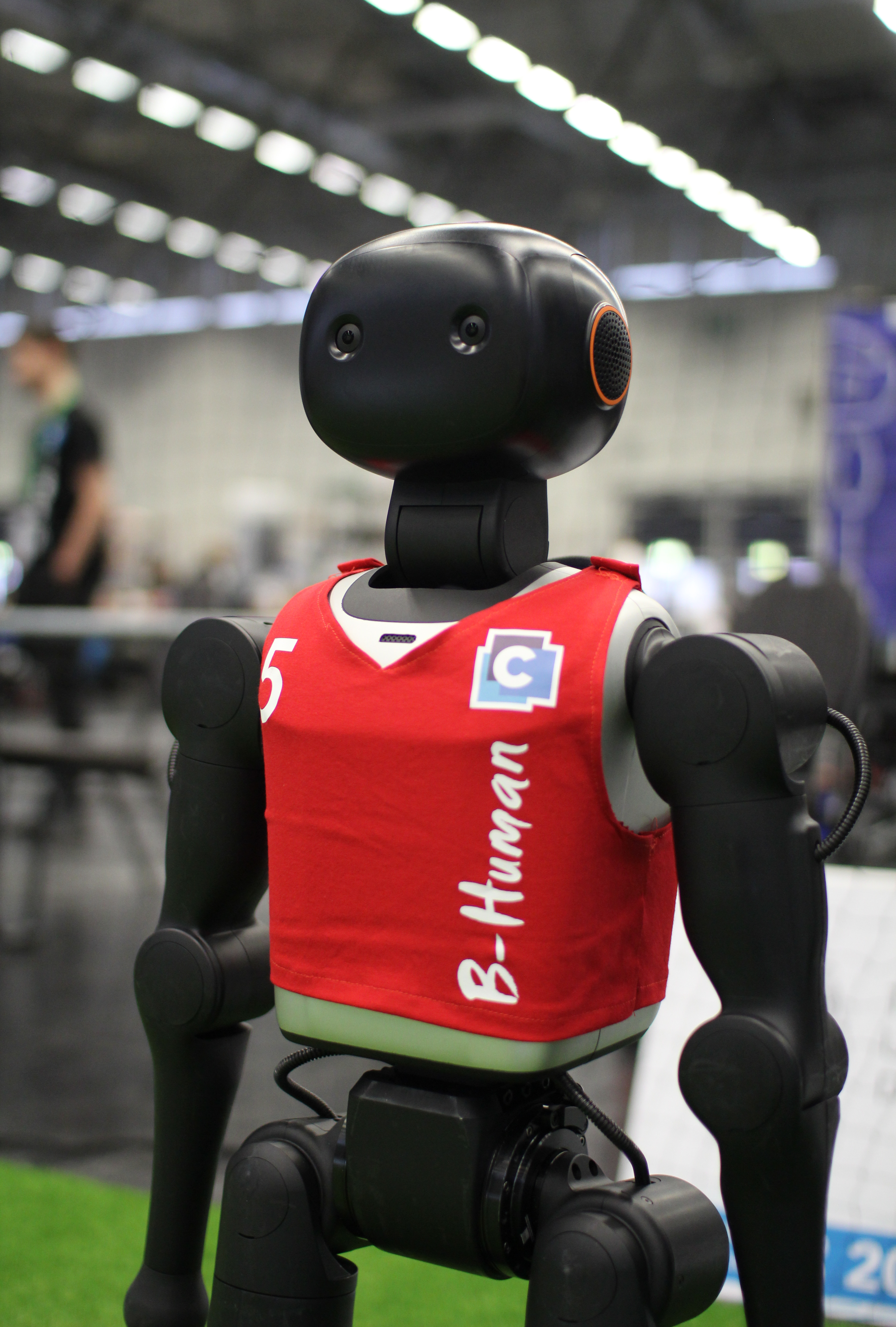
B-Human is currently one of the best teams in the RoboCup Humanoid Soccer League and has won the world championship thirteen times as well as sixteen regional competitions. Our team consists of students and researchers from the University of Bremen and DFKI.








B-Human
About B-Human
B-Human is a project of the Computer Science Department 3 - Mathematics and Computer Science (research group for Multisensor Interactive Systems) of the University of Bremen and the Cyber-Physical Systems research department of DFKI. The objective of the project is both the development of software to participate in RoboCup competitions and, within a vibrant subject area, to inspire students for an academic career or research. Our team consists of students and researchers from the University of Bremen and DFKI. RoboCup is a fascinating combination of innovative research and the world’s most popular team sport. Initially, we participated in competitions in the RoboCup Humanoid League until we joined the Standard Platform League in 2008. Since then, we have been participating in the German Open, the European Open, and the RoboCup World Championships.
Our Achievements
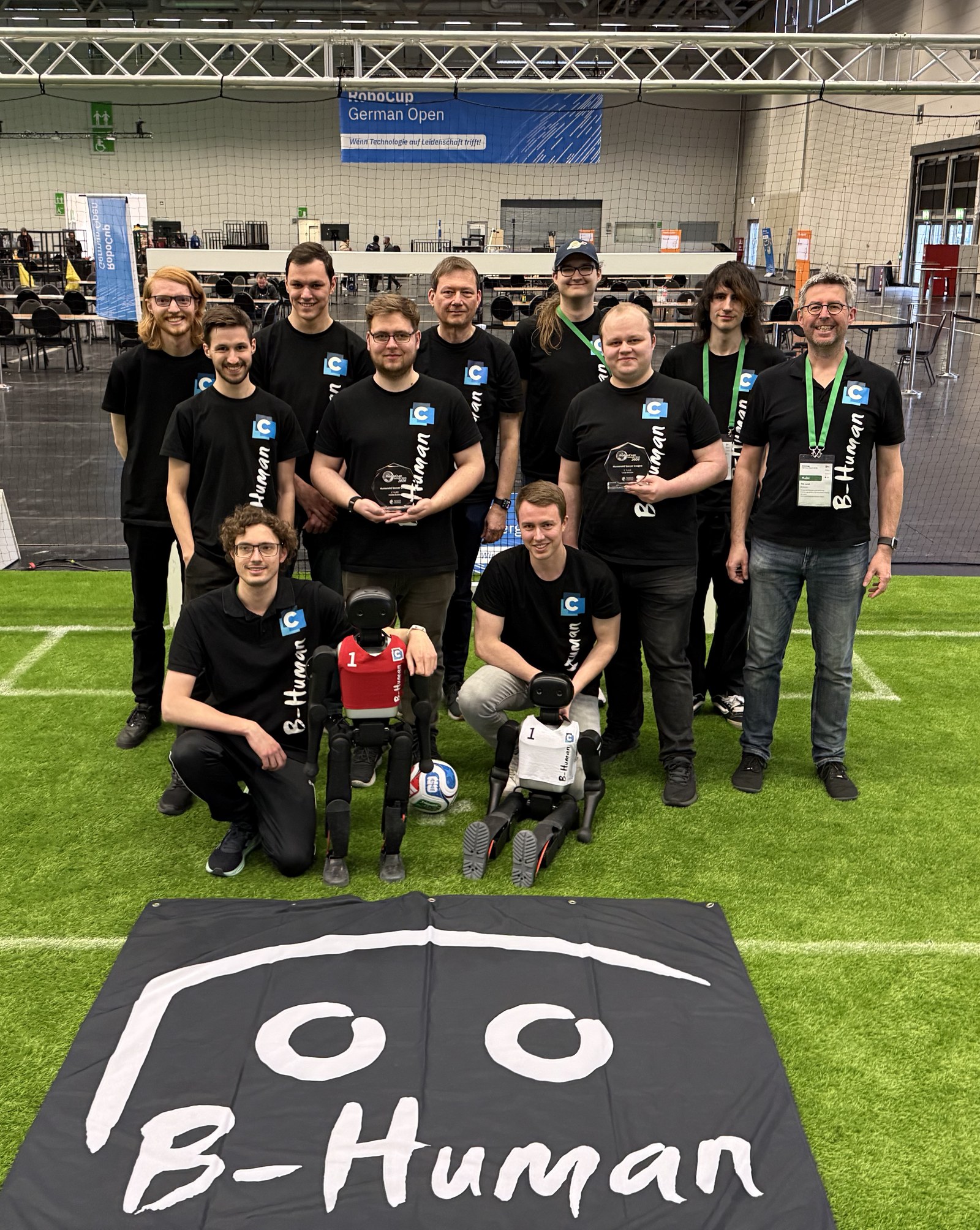
B-Human is currently one of the best teams in the RoboCup Humanoid Soccer League and has won the world championship thirteen times as well as sixteen regional competitions. We rely on financial support from sponsors to continue our work and to keep participating in international competitions. If you are interested in supporting us, you can find more information on our sponsoring page.
RoboCup
Our Achievements
| RoboCup World Championship | Regional Championships | |||
|---|---|---|---|---|
| Year | Place | Placement | Competition | Placement |
| 2009 | Graz, Austria | German Open, Hannover | ||
| 2010 | Singapore, Singapore | German Open, Magdeburg | ||
| 2011 | Istanbul, Turkey | German Open, Magdeburg | ||
| 2012 | Mexico City, Mexico | German Open, Magdeburg | ||
| 2013 | Eindhoven, Netherlands | German Open, Magdeburg | ||
| 2014 | João Pessoa, Brazil | German Open, Magdeburg | ||
| 2015 | Hefei, China | German Open, Magdeburg | ||
| 2016 | Leipzig, Germany | European Open, Eindhoven | ||
| 2017 | Nagoya, Japan | German Open, Magdeburg | ||
| 2018 | Montréal, Canada | German Open, Magdeburg | ||
| 2019 | Sydney, Australia | German Open, Magdeburg | ||
| 2021 | Worldwide | German Open Replacement Event, Dortmund and Bremen | ||
| 2022 | Bangkok, Thailand | German Open Replacement Event, Hamburg | ||
| 2023 | Bordeaux, France | German Open Replacement Event, Hamburg | ||
| 2024 | Eindhoven, Netherlands | German Open, Kassel | ||
| 2025 | Salvador, Brazil | German Open, Nuremberg | ||
| 2026 | Incheon, South Korea | German Open, Cologne | ||
| Summary | 13 x 3 x 1 x | 16 x 1 x | ||
Dwarfs reaching for the Stars
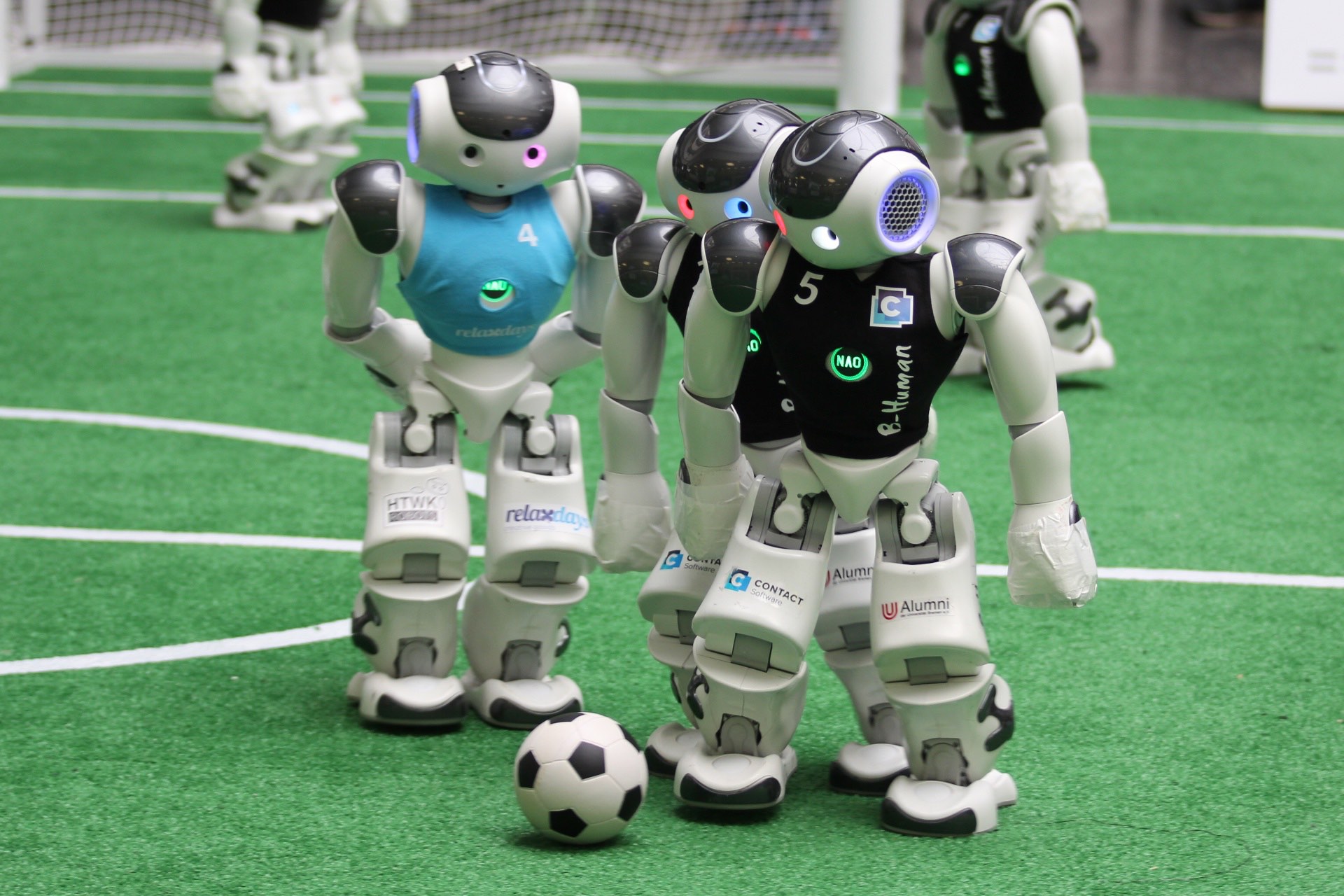
Shot and... Goal! Cheering outside the field. Surprisingly, it's not proud parents of young football players cheering. A dozen of knee-high robots are playing football against each other. What was that? Foul! One of the plastic buddies is going down with a stoic innocent look. It is comical to watch. But what's behind all this: a lot of work and many years of research that have gone into it. Scientists are trying to follow the humans' example.
Exactly there lies the appeal. Human beings learn to orientate themselves and to move throughout their entire life. Teaching a robot these skills is a highly demanding task. Everything that is normal to us - let it be recognizing the ball or moving one foot after the other - is absolutely not trivial for a bundle of cameras, motors, and circuits. Again and again we realize through the work with robots how complex these events are and about the limits of technology.
The robots' tasks are diverse. First of all, they need to orientate themselves in their surrounding to know where the goals are and in which one they have to shoot the ball. Many clues are being analyzed, e.g. the field's lines. If one player is unsure where he is, they all communicate among each other. It is even possible to change one player's mind. While the goal is clear, they also have to figure out the way. A robot constantly has to decide between several options: Which way do I take? When shall I shoot? Decisions that highly influence the result of the game.
Developments in this field of research are terrific, fast and exciting. And they can be observed by spectators. From bachelor students to graduate students studying for a doctorate, there are many topics: reaching from the recognition of objects to balanced movements. Success and results can be seen and measured at competitions that regularly take place at exhibitions and fairs - they definitely are a crowd puller.